
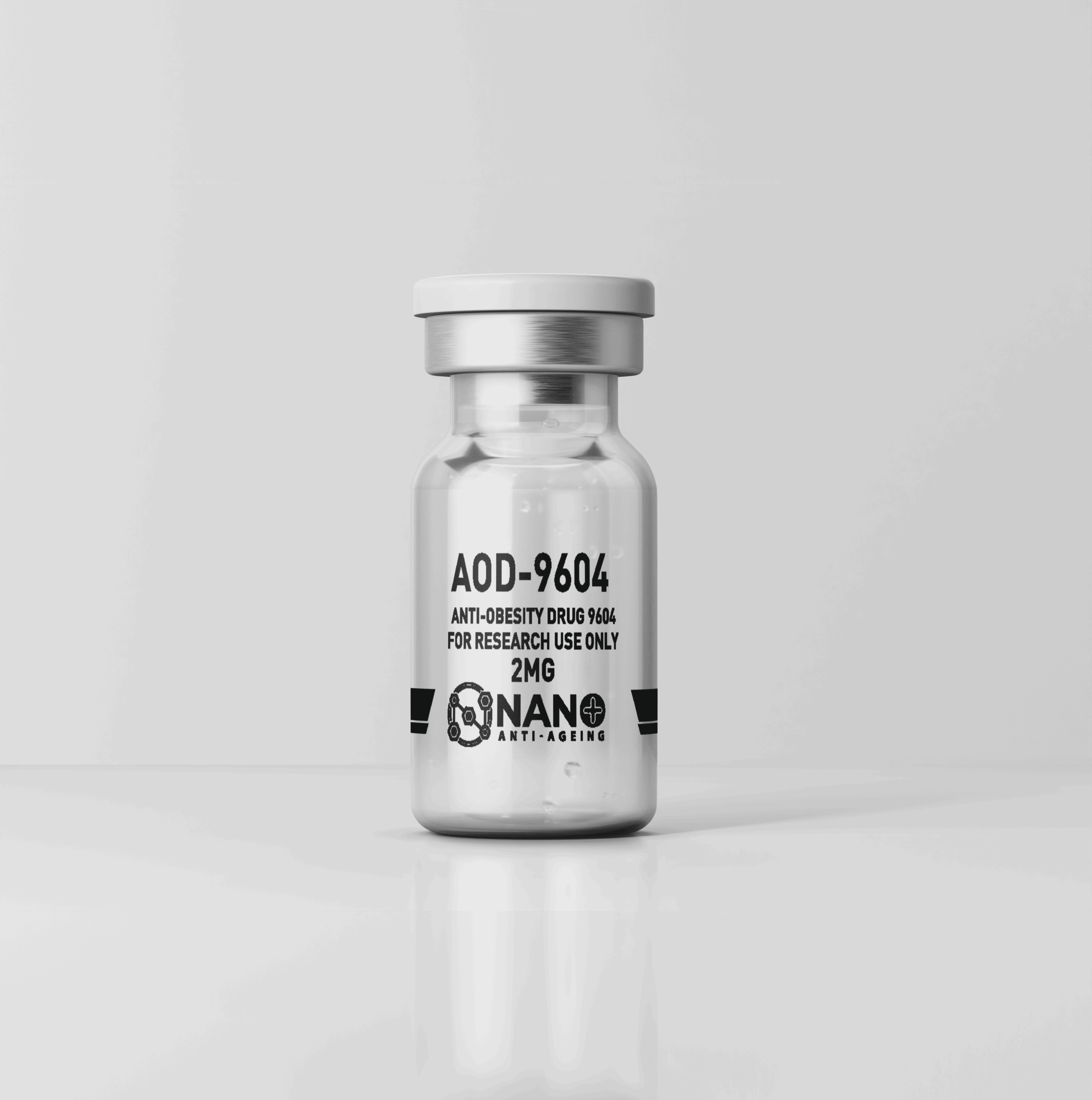
AOD-9604, a synthetic peptide derived from a fragment of the human growth hormone (hGH), holds significant implications in lipid metabolism and obesity management. Specifically, it corresponds to the C-terminus of hGH (hGH 177-191) and includes an additional tyrosine residue at the N-terminal for stability, enhancing its functionality as a lipolytic agent (Stier, 2013).
Extensive research has investigated AOD-9604’s mechanisms of action. Studies have indicated that AOD-9604 can induce physiological effects on lipid metabolism that are comparable to those of hGH. In experiments using obese rodent models, AOD-9604 was observed to improve glucose tolerance and enhance insulin sensitivity, critical factors for effective weight management (Ng et al., 2000). These findings emphasize the peptide’s potential in addressing obesity-related metabolic disorders.
AOD-9604’s effectiveness is attributed to its capacity to modulate the metabolism of adipose tissue. Research indicates that AOD-9604 enhances lipolysis while suppressing lipid accumulation in adipose tissues, promoting weight loss (Stier, 2013). Moreover, its impact on blood glucose regulation is notable; studies have shown that AOD-9604 significantly influences glucose homeostasis, which may bolster its weight management properties (Ng et al., 2000).
Pharmacological evaluations of AOD-9604 suggest its promise as an anti-obesity therapeutic agent. Various metabolic studies indicate that it may facilitate weight reduction through mechanisms separate from traditional appetite suppression strategies. This positions AOD-9604 as a potentially innovative approach to tackle obesity, particularly in populations with metabolic dysregulation (Xue et al., 2023; Müller et al., 2021). The peptide has undergone rigorous analytical assessments to characterize its efficacy and safety, enhancing its appeal in the realm of metabolic therapeutics (Vanhee et al., 2014).
In conclusion, AOD-9604 represents a novel peptide candidate for managing obesity. Its unique structural characteristics and demonstrable effects on lipid metabolism and glucose regulation underscore its potential utility in therapeutic settings aimed at combating obesity and associated metabolic disorders. Continued research is likely to further clarify its mechanisms of action and optimize its application in clinical settings.
References:
(2013). Safety and tolerability of the hexadecapeptide aod9604 in humans. Journal of Endocrinology and Metabolism. https://doi.org/10.4021/jem157w
Müller, T., Blüher, M., Tschöp, M., & DiMarchi, R. (2021). Anti-obesity drug discovery: advances and challenges. Nature Reviews Cancer, 21(3), 201-223. https://doi.org/10.1038/s41573-021-00337-8
Ng, F., Sun, J., Sharma, L., Libinaka, R., Jiang, W., & Gianello, R. (2000). Metabolic studies of a synthetic lipolytic domain (aod9604) of human growth hormone. Hormone Research in Paediatrics, 53(6), 274-278. https://doi.org/10.1159/000053183
Vanhee, C., Moens, G., Deconinck, E., & Beer, J. (2014). Identification and characterization of peptide drugs in unknown pharmaceutical preparations seized by the belgian authorities: case report on aod9604. Drug Testing and Analysis, 6(9), 964-968. https://doi.org/10.1002/dta.1687
Xue, Y., Zou, H., Ruan, Z., Chen, X., Lai, Y., Yao, D., … & Hu, H. (2023). Pharmacoeconomic evaluation of anti-obesity drugs for chronic weight management: a systematic review of literature. Frontiers in Endocrinology, 14. https://doi.org/10.3389/fendo.2023.1254398



Reviews
There are no reviews yet.