
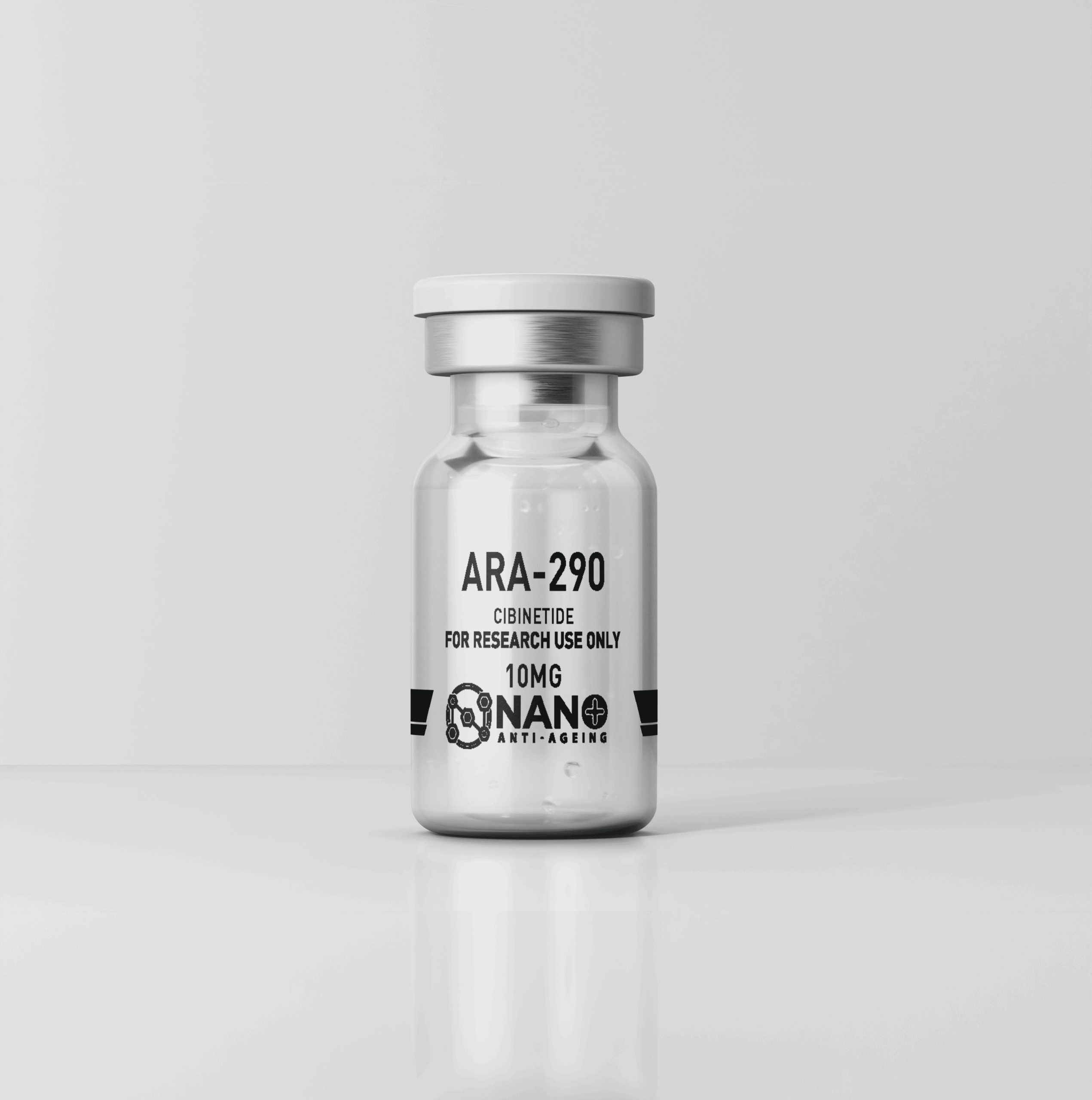
ARA-290, also known as Cibinetide, is a synthetic peptide derived from the structure of erythropoietin (EPO), specifically engineered to retain therapeutic benefits while minimizing hematopoietic effects (Lois et al., 2020; . This 11-amino-acid peptide is designed to engage specifically with the innate repair receptor (IRR), facilitating neuroprotection and metabolic regulation Brines et al., 2014), Brines et al., 2008). The therapeutic mechanism of ARA-290 is characterized by its ability to modulate anti-apoptotic and anti-inflammatory pathways, which are crucial in various tissue damage scenarios (Lois et al., 2020; , Brines et al., 2008).
Research has demonstrated that ARA-290 promotes significant biological responses at concentrations exceeding approximately 1 ng/mL, functioning as a critical molecular switch within the immune response (Heij et al., 2012; . Clinical safety and efficacy of ARA-290 have been evaluated in conditions such as sarcoidosis associated with small fiber neuropathy (Heij et al., 2012; . Additionally, it has shown promise in broader applications, including type 2 diabetes, where it has demonstrated improvements in metabolic control and alleviation of neuropathic symptoms Brines et al., 2014).
In experimental models, ARA-290 has exhibited protective effects against neuropathic pain and is associated with favorable outcomes in preventing damage within nervous tissues (Heij et al., 2012; , Brines et al., 2014). These protective properties align with preclinical findings that show ARA-290’s ability to interfere with pathological processes leading to cell degeneration through direct cellular interactions and modulation of local inflammatory responses (Lois et al., 2020; , Brines et al., 2008). Notably, these findings are reinforced by reports illustrating the potential of similar non-erythropoietic peptides, emphasizing a broader category of therapeutics focused on tissue repair and neuroprotection Brines et al., 2008).
Interest surrounding ARA-290 continues to grow due to its potential implications across a spectrum of conditions characterized by tissue injury and maladaptive immune responses. As research progresses, ARA-290 may serve as a model for future peptide-based therapies and a focal point for strategies aimed at mitigating complications associated with chronic diseases. Given these attributes and the promising results from preclinical studies, ARA-290 represents an essential avenue for further exploration in translational medicine (Lois et al., 2020; , Brines et al., 2008).
In conclusion, ARA-290 showcases a multi-faceted protective profile aimed at addressing metabolic dysregulation and tissue damage across various pathological conditions. As it bridges the gap between basic science and clinical application, ARA-290 may significantly contribute to future therapeutic avenues in healthcare, particularly in chronic conditions involving neuropathy and inflammation.
References:
Brines, M., Dunne, A., Velzen, M., Proto, P., Östenson, C., Kirk, R., … & Dahan, A. (2014). Ara 290, a nonerythropoietic peptide engineered from erythropoietin, improves metabolic control and neuropathic symptoms in patients with type 2 diabetes. Molecular Medicine, 20(1), 658-666. https://doi.org/10.2119/molmed.2014.00215
Brines, M., Patel, N., Villa, P., Brines, C., Mennini, T., Paola, M., … & Cerami, A. (2008). Nonerythropoietic, tissue-protective peptides derived from the tertiary structure of erythropoietin. Proceedings of the National Academy of Sciences, 105(31), 10925-10930. https://doi.org/10.1073/pnas.0805594105
Heij, L., Niesters, M., Swartjes, M., Hoitsma, E., Drent, M., Dunne, A., … & Dahan, A. (2012). Safety and efficacy of ara 290 in sarcoidosis patients with symptoms of small fiber neuropathy: a randomized, double-blind pilot study. Molecular Medicine, 18(11), 1430-1436. https://doi.org/10.2119/molmed.2012.00332
Lois, N., Gardner, E., McFarland, M., Armstrong, D., McNally, C., Lavery, N., … & Brines, M. (2020). A phase 2 clinical trial on the use of cibinetide for the treatment of diabetic macular edema. Journal of Clinical Medicine, 9(7), 2225. https://doi.org/10.3390/jcm9072225



Reviews
There are no reviews yet.