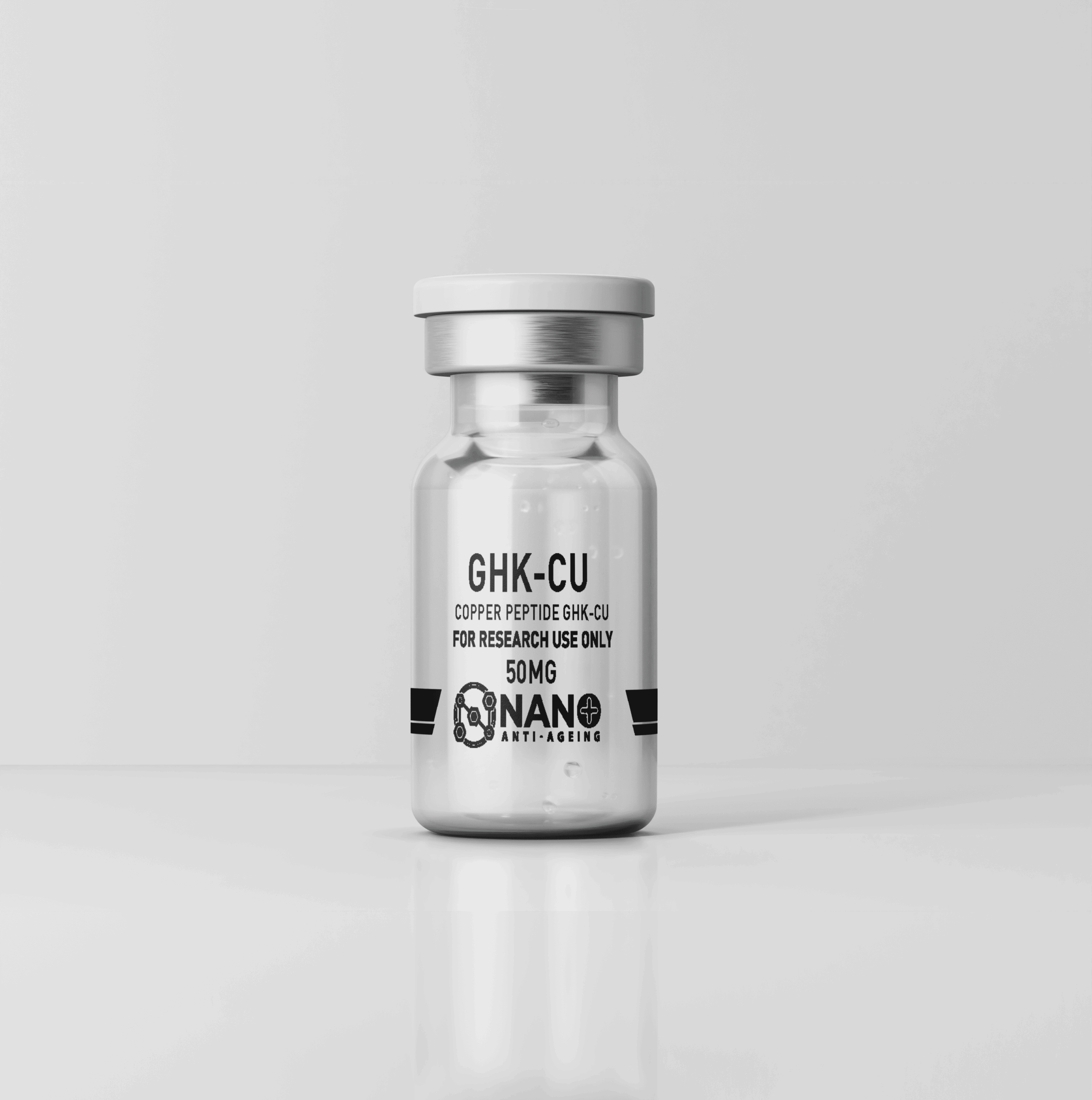
GHK-CU 50

45.00 $

GHK-Cu, or Glycyl-L-histidyl-L-lysine-copper(II), is a naturally occurring copper peptide that has gained considerable attention in regenerative medicine and wound healing due to its diverse biological activities. This peptide complex is recognized for its role in promoting skin health, enhancing wound healing, and exhibiting antioxidant and anti-inflammatory properties. Research into GHK-Cu has shown that it stimulates fibroblast activity, increases collagen synthesis, and influences gene expression related to tissue remodeling and repair processes, making it a vital component in regenerative therapies Badenhorst et al., 2016)(Pickart et al., 2015; (Dou et al., 2020; .

One of the key advantages of GHK-Cu lies in its ability to modulate critical cellular pathways involved in wound healing. Studies have demonstrated that GHK-Cu can significantly affect the expression of metalloproteinases (MMPs) and tissue inhibitors of metalloproteinases (TIMPs), thereby impacting matrix remodeling, which is crucial for effective wound healing Badenhorst et al., 2016)(Pickart et al., 2015; . Furthermore, the peptide has been reported to enhance angiogenesis, or the formation of new blood vessels, which is instrumental in providing the necessary nutrients and oxygen required for the healing process (Riaz et al., 2025).

Experimental studies support the therapeutic potential of GHK-Cu in a variety of contexts, including skin regeneration and the treatment of chronic wounds. In a pilot study, GHK-Cu has been shown to reduce disease severity in patients with inflammatory bowel disease (IBD), indicating its applications in tissue repair beyond just dermal applications (Mao et al., 2025). Moreover, GHK-Cu has been integrated into various delivery systems, such as hydrogels and nanoparticles, to enhance its stability and therapeutic efficacy, addressing concerns about its biological availability in physiological conditions (Jeon et al., 2025; Sun et al., 2019).

In addition to its effects on wound healing, GHK-Cu also exhibits promising anti-aging properties. It has been reported to reduce facial wrinkles by influencing processes such as collagen and elastin production by dermal fibroblasts (Dou et al., 2020; Badenhorst et al., 2016). The peptide’s capacity to modulate gene expression also contributes to its ability to counteract the signs of aging by restoring skin integrity and function (Pickart et al., 2015; Pickart et al., 2015).

Notably, GHK-Cu has been studied extensively not only for its biochemical effects but also for its physical properties when incorporated into biomaterials aimed at tissue regeneration. Self-assembled GHK-Cu nanoparticles have emerged as a novel strategy to deliver the peptide effectively, improving wound healing outcomes by leveraging their antibacterial properties alongside the regenerative capabilities of GHK-Cu itself (Jeon et al., 2025; Sun et al., 2019).

In summary, GHK-Cu is a multifaceted peptide that plays a significant role in the modulation of healing processes, tissue regeneration, and skin health. Its various applications and mechanisms of action highlight its potential as a therapeutic agent in regenerative medicine, paving the way for further research into its capabilities and optimal uses in clinical settings.

References:
Badenhorst, T., Svirskis, D., & Merrilees, M. (2016). Effects of ghk-cu on mmp and timp expression, collagen and elastin production, and facial wrinkle parameters. Journal of Aging Science, 04(03). https://doi.org/10.4172/2329-8847.1000166
Dou, Y., Lee, A., Zhu, L., Morton, J., & Ladiges, W. (2020). The potential of ghk as an anti-aging peptide. Aging Pathobiology and Therapeutics, 2(1), 58-61. https://doi.org/10.31491/apt.2020.03.014
Jeon, N., Kim, I., Choi, S., Lee, H., Min, J., Kim, H., … & Lee, E. (2025). Self-assembled peptide-gold nanoparticle 1d nanohybrids functionalized with ghk tripeptide for enhanced wound-healing and photothermal therapy. Acs Applied Materials & Interfaces, 17(10), 15080-15096. https://doi.org/10.1021/acsami.4c21924
Mao, S., Huang, J., Li, J., Sun, F., Zhang, Q., Cheng, Q., … & Yao, J. (2025). Exploring the beneficial effects of ghk-cu on an experimental model of colitis and the underlying mechanisms. Frontiers in Pharmacology, 16. https://doi.org/10.3389/fphar.2025.1551843
Pickart, L., Vasquez-Soltero, J., & Margolina, A. (2015). Ghk peptide as a natural modulator of multiple cellular pathways in skin regeneration. Biomed Research International, 2015, 1-7. https://doi.org/10.1155/2015/648108
Pickart, L., Vasquez-Soltero, J., & Margolina, A. (2015). Ghk-cu may prevent oxidative stress in skin by regulating copper and modifying expression of numerous antioxidant genes. Cosmetics, 2(3), 236-247. https://doi.org/10.3390/cosmetics2030236
Riaz, M., Iqbal, M., Klar, A., & Biedermann, T. (2025). Immunomodulatory mechanisms of chronic wound healing: translational and clinical relevance. Medcomm, 6(11). https://doi.org/10.1002/mco2.70378
Sun, L., Li, A., Hu, Y., Li, Y., Shang, L., & Zhang, L. (2019). Self‐assembled fluorescent and antibacterial ghk‐cu nanoparticles for wound healing applications. Particle & Particle Systems Characterization, 36(4). https://doi.org/10.1002/ppsc.201800420

GHK-Cu, or Glycyl-L-histidyl-L-lysine-copper(II), is a naturally occurring copper peptide that has gained considerable attention in regenerative medicine and wound healing due to its diverse biological activities. This peptide complex is recognized for its role in promoting skin health, enhancing wound healing, and exhibiting antioxidant and anti-inflammatory properties. Research into GHK-Cu has shown that it stimulates fibroblast activity, increases collagen synthesis, and influences gene expression related to tissue remodeling and repair processes, making it a vital component in regenerative therapies Badenhorst et al., 2016)(Pickart et al., 2015; (Dou et al., 2020; .

One of the key advantages of GHK-Cu lies in its ability to modulate critical cellular pathways involved in wound healing. Studies have demonstrated that GHK-Cu can significantly affect the expression of metalloproteinases (MMPs) and tissue inhibitors of metalloproteinases (TIMPs), thereby impacting matrix remodeling, which is crucial for effective wound healing Badenhorst et al., 2016)(Pickart et al., 2015; . Furthermore, the peptide has been reported to enhance angiogenesis, or the formation of new blood vessels, which is instrumental in providing the necessary nutrients and oxygen required for the healing process (Riaz et al., 2025).

Experimental studies support the therapeutic potential of GHK-Cu in a variety of contexts, including skin regeneration and the treatment of chronic wounds. In a pilot study, GHK-Cu has been shown to reduce disease severity in patients with inflammatory bowel disease (IBD), indicating its applications in tissue repair beyond just dermal applications (Mao et al., 2025). Moreover, GHK-Cu has been integrated into various delivery systems, such as hydrogels and nanoparticles, to enhance its stability and therapeutic efficacy, addressing concerns about its biological availability in physiological conditions (Jeon et al., 2025; Sun et al., 2019).

In addition to its effects on wound healing, GHK-Cu also exhibits promising anti-aging properties. It has been reported to reduce facial wrinkles by influencing processes such as collagen and elastin production by dermal fibroblasts (Dou et al., 2020; Badenhorst et al., 2016). The peptide’s capacity to modulate gene expression also contributes to its ability to counteract the signs of aging by restoring skin integrity and function (Pickart et al., 2015; Pickart et al., 2015).

Notably, GHK-Cu has been studied extensively not only for its biochemical effects but also for its physical properties when incorporated into biomaterials aimed at tissue regeneration. Self-assembled GHK-Cu nanoparticles have emerged as a novel strategy to deliver the peptide effectively, improving wound healing outcomes by leveraging their antibacterial properties alongside the regenerative capabilities of GHK-Cu itself (Jeon et al., 2025; Sun et al., 2019).

In summary, GHK-Cu is a multifaceted peptide that plays a significant role in the modulation of healing processes, tissue regeneration, and skin health. Its various applications and mechanisms of action highlight its potential as a therapeutic agent in regenerative medicine, paving the way for further research into its capabilities and optimal uses in clinical settings.

References:
Badenhorst, T., Svirskis, D., & Merrilees, M. (2016). Effects of ghk-cu on mmp and timp expression, collagen and elastin production, and facial wrinkle parameters. Journal of Aging Science, 04(03). https://doi.org/10.4172/2329-8847.1000166
Dou, Y., Lee, A., Zhu, L., Morton, J., & Ladiges, W. (2020). The potential of ghk as an anti-aging peptide. Aging Pathobiology and Therapeutics, 2(1), 58-61. https://doi.org/10.31491/apt.2020.03.014
Jeon, N., Kim, I., Choi, S., Lee, H., Min, J., Kim, H., … & Lee, E. (2025). Self-assembled peptide-gold nanoparticle 1d nanohybrids functionalized with ghk tripeptide for enhanced wound-healing and photothermal therapy. Acs Applied Materials & Interfaces, 17(10), 15080-15096. https://doi.org/10.1021/acsami.4c21924
Mao, S., Huang, J., Li, J., Sun, F., Zhang, Q., Cheng, Q., … & Yao, J. (2025). Exploring the beneficial effects of ghk-cu on an experimental model of colitis and the underlying mechanisms. Frontiers in Pharmacology, 16. https://doi.org/10.3389/fphar.2025.1551843
Pickart, L., Vasquez-Soltero, J., & Margolina, A. (2015). Ghk peptide as a natural modulator of multiple cellular pathways in skin regeneration. Biomed Research International, 2015, 1-7. https://doi.org/10.1155/2015/648108
Pickart, L., Vasquez-Soltero, J., & Margolina, A. (2015). Ghk-cu may prevent oxidative stress in skin by regulating copper and modifying expression of numerous antioxidant genes. Cosmetics, 2(3), 236-247. https://doi.org/10.3390/cosmetics2030236
Riaz, M., Iqbal, M., Klar, A., & Biedermann, T. (2025). Immunomodulatory mechanisms of chronic wound healing: translational and clinical relevance. Medcomm, 6(11). https://doi.org/10.1002/mco2.70378
Sun, L., Li, A., Hu, Y., Li, Y., Shang, L., & Zhang, L. (2019). Self‐assembled fluorescent and antibacterial ghk‐cu nanoparticles for wound healing applications. Particle & Particle Systems Characterization, 36(4). https://doi.org/10.1002/ppsc.201800420

Reviews

There are no reviews yet.

Be the first to review “GHK-CU 50”

Your email address will not be published. Required fields are marked *

Related Product

0
    Your Cart
    Your cart is emptyReturn to Shop
    Scroll to Top
    Generic selectors
    Exact matches only
    Search in title
    Search in content
    Post Type Selectors