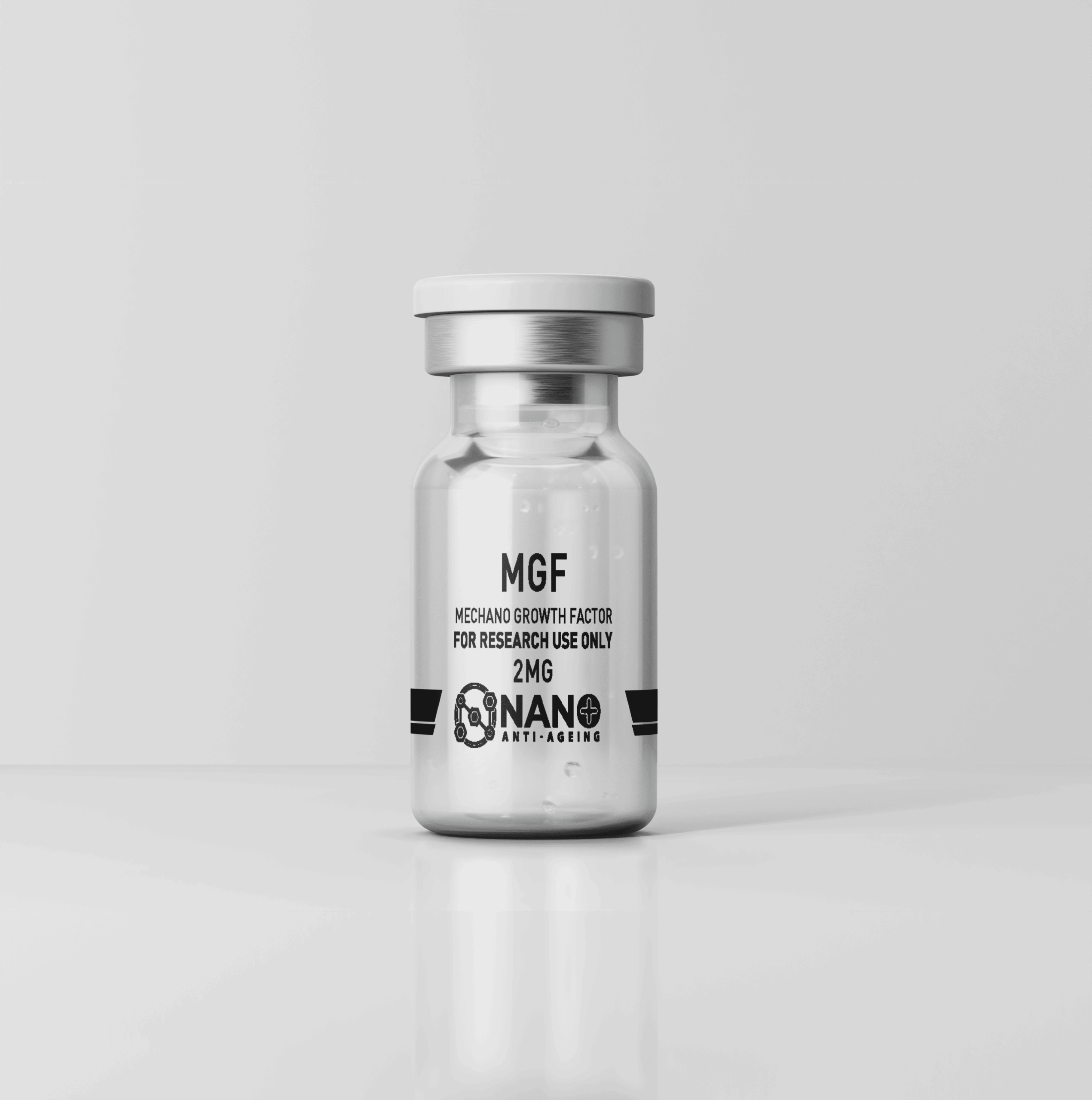
MGF

49.00 $

Out of stock

MGF, or MechanoGrowth Factor, is a peptide derived from insulin-like growth factor 1 (IGF-1) that is significant in muscle regeneration and growth. It is primarily produced in response to mechanical overload and cellular stress, reflecting its role in muscle adaptation and repair processes. MGF has been extensively studied in skeletal muscle physiology, where it acts as a paracrine and autocrine factor, influencing both the proliferation and differentiation of myoblasts during muscle regeneration Owino et al., 2001)Yang & Goldspink, 2002).

Research indicates that MGF promotes the proliferation of satellite cells, which are essential for muscle repair and regeneration Owino et al., 2001)Yang & Goldspink, 2002). Studies involving the murine C2C12 skeletal muscle cell line have demonstrated distinct physiological roles of MGF in comparison to its mature counterpart, IGF-1. While IGF-1 is mainly linked to general growth promotion, MGF is activated in response to mechanical stimuli, thereby enhancing muscle cell survival and proliferation Yang & Goldspink, 2002). Furthermore, findings suggest that age-related declines in muscle function may be partly due to reduced expression of MGF, which impairs the regenerative capacity of satellite cells in aging skeletal muscle Owino et al., 2001)Yang & Goldspink, 2002).

In a broader context, MGF has also been associated with neuroprotective roles beyond muscle dynamics. For instance, research shows that MGF can exhibit a neuroprotective effect during brain ischemia, suggesting its ability to mitigate damage via mechanisms involving apoptosis regulation and promoting neuronal survival in stressful conditions (Dłużniewska et al., 2005; . These findings emphasize MGF’s multifaceted nature, functioning in both musculoskeletal systems and broader physiological processes within the nervous system.

The exploration of MGF’s potential implications for treating neurodegenerative conditions and enhancing muscle recovery post-injury or surgery continues to grow (Dłużniewska et al., 2005; Owino et al., 2001). By elucidating MGF’s mechanisms at the molecular level, researchers can investigate its therapeutic applications in muscle degenerative diseases and other disorders where cellular repair mechanisms are compromised.

In summary, MGF is a crucial growth factor with vital roles in muscle physiology and potential neuroprotection. Continued research on MGF is likely to lead to advances in therapeutic strategies aimed at improving muscle recovery and protecting neural tissues.

References:
Dłużniewska, J., Sarnowska, A., Beresewicz, M., Johnson, I., Srai, S., Ramesh, B., … & Zabłocka, B. (2005). A strong neuroprotective effect of the autonomous c‐terminal peptide of igf‐1 ec (mgf) in brain ischemia. The Faseb Journal, 19(13), 1896-1898. https://doi.org/10.1096/fj.05-3786fje
Owino, V., Yang, S., & Goldspink, G. (2001). Age‐related loss of skeletal muscle function and the inability to express the autocrine form of insulin‐like growth factor‐1 (mgf) in response to mechanical overload. Febs Letters, 505(2), 259-263. https://doi.org/10.1016/s0014-5793(01)02825-3
Yang, S. and Goldspink, G. (2002). Different roles of the igf‐i ec peptide (mgf) and mature igf‐i in myoblast proliferation and differentiation. Febs Letters, 522(1-3), 156-160. https://doi.org/10.1016/s0014-5793(02)02918-6


MGF, or MechanoGrowth Factor, is a peptide derived from insulin-like growth factor 1 (IGF-1) that is significant in muscle regeneration and growth. It is primarily produced in response to mechanical overload and cellular stress, reflecting its role in muscle adaptation and repair processes. MGF has been extensively studied in skeletal muscle physiology, where it acts as a paracrine and autocrine factor, influencing both the proliferation and differentiation of myoblasts during muscle regeneration Owino et al., 2001)Yang & Goldspink, 2002).

Research indicates that MGF promotes the proliferation of satellite cells, which are essential for muscle repair and regeneration Owino et al., 2001)Yang & Goldspink, 2002). Studies involving the murine C2C12 skeletal muscle cell line have demonstrated distinct physiological roles of MGF in comparison to its mature counterpart, IGF-1. While IGF-1 is mainly linked to general growth promotion, MGF is activated in response to mechanical stimuli, thereby enhancing muscle cell survival and proliferation Yang & Goldspink, 2002). Furthermore, findings suggest that age-related declines in muscle function may be partly due to reduced expression of MGF, which impairs the regenerative capacity of satellite cells in aging skeletal muscle Owino et al., 2001)Yang & Goldspink, 2002).

In a broader context, MGF has also been associated with neuroprotective roles beyond muscle dynamics. For instance, research shows that MGF can exhibit a neuroprotective effect during brain ischemia, suggesting its ability to mitigate damage via mechanisms involving apoptosis regulation and promoting neuronal survival in stressful conditions (Dłużniewska et al., 2005; . These findings emphasize MGF’s multifaceted nature, functioning in both musculoskeletal systems and broader physiological processes within the nervous system.

The exploration of MGF’s potential implications for treating neurodegenerative conditions and enhancing muscle recovery post-injury or surgery continues to grow (Dłużniewska et al., 2005; Owino et al., 2001). By elucidating MGF’s mechanisms at the molecular level, researchers can investigate its therapeutic applications in muscle degenerative diseases and other disorders where cellular repair mechanisms are compromised.

In summary, MGF is a crucial growth factor with vital roles in muscle physiology and potential neuroprotection. Continued research on MGF is likely to lead to advances in therapeutic strategies aimed at improving muscle recovery and protecting neural tissues.

References:
Dłużniewska, J., Sarnowska, A., Beresewicz, M., Johnson, I., Srai, S., Ramesh, B., … & Zabłocka, B. (2005). A strong neuroprotective effect of the autonomous c‐terminal peptide of igf‐1 ec (mgf) in brain ischemia. The Faseb Journal, 19(13), 1896-1898. https://doi.org/10.1096/fj.05-3786fje
Owino, V., Yang, S., & Goldspink, G. (2001). Age‐related loss of skeletal muscle function and the inability to express the autocrine form of insulin‐like growth factor‐1 (mgf) in response to mechanical overload. Febs Letters, 505(2), 259-263. https://doi.org/10.1016/s0014-5793(01)02825-3
Yang, S. and Goldspink, G. (2002). Different roles of the igf‐i ec peptide (mgf) and mature igf‐i in myoblast proliferation and differentiation. Febs Letters, 522(1-3), 156-160. https://doi.org/10.1016/s0014-5793(02)02918-6

Reviews

There are no reviews yet.

Be the first to review “MGF”

Your email address will not be published. Required fields are marked *

Related Product

0
    Your Cart
    Your cart is emptyReturn to Shop
    Scroll to Top
    Generic selectors
    Exact matches only
    Search in title
    Search in content
    Post Type Selectors