
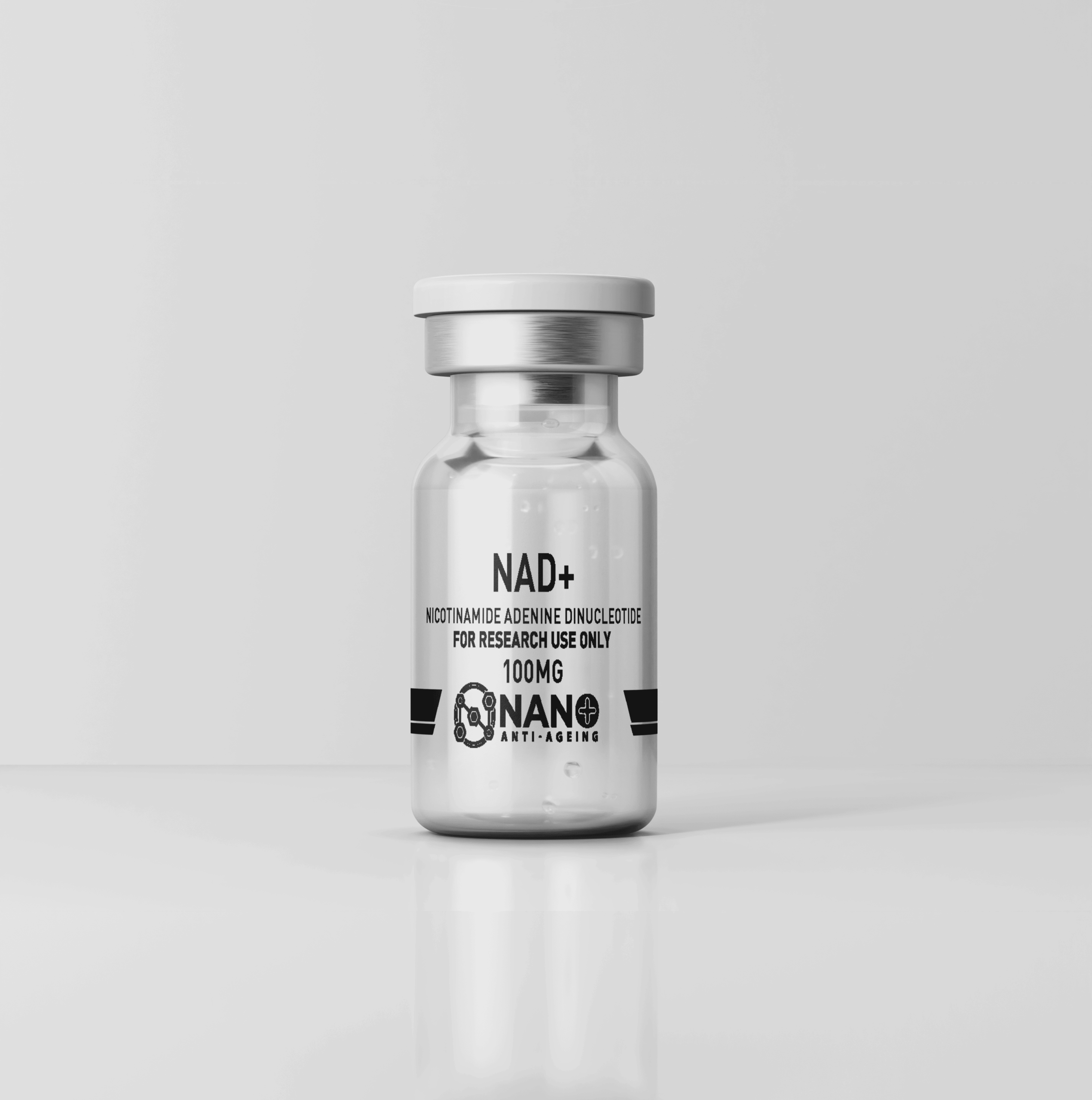
Nicotinamide adenine dinucleotide (NAD+) is a fundamental coenzyme that plays a pivotal role in numerous biological processes, including energy metabolism, cellular signaling, and DNA repair. It exists in two forms: the oxidized NAD+ and the reduced NADH, participating actively in redox reactions that are critical for cellular energy production and metabolic homeostasis (Saqr et al., 2024)Biswas, 2020). NAD+ is integral not just for ATP synthesis through glycolysis and oxidative phosphorylation, but also as a substrate for sirtuins, a family of enzymes involved in stress responses, aging, and cellular regulation (Tannous et al., 2020; Okabe et al., 2019). The discovery of extracellular NAD+ has broad implications, suggesting its potential role in various pathological conditions, thereby necessitating accurate measurement and understanding of its dynamics in the human body (Saqr et al., 2024).
As NAD+ levels decline with age and in various metabolic disorders, maintaining its levels is of significant research interest. Supplementation with NAD+ precursors, such as nicotinamide riboside (NR) and nicotinamide mononucleotide (NMN), has shown promising effects on raising NAD+ levels in multiple studies. These precursors have been demonstrated to enhance NAD+ levels without leading to adverse side effects, showcasing a safe profile for human consumption (Okabe et al., 2022; Airhart et al., 2017; Igarashi et al., 2022). In clinical trials, administration of NMN and NR has been associated with improved metabolic parameters, such as lipid and glucose metabolism, and may also have protective effects against age-related cognitive decline and neurodegenerative diseases (Campbell, 2022; Poljšak et al., 2022).
The mechanisms by which NAD+ influences cellular functions are complex and multifaceted. For instance, NAD+ acts as a substrate for poly(ADP-ribose) polymerases involved in DNA repair processes, linking NAD+ depletion to increased susceptibility to genomic instability and diseases (Tannous et al., 2020; Okabe et al., 2019). Furthermore, NAD+ modulates inflammation and oxidative stress, with studies showing that NAD+ boosting can mitigate inflammatory responses in various models, thus emphasizing its therapeutic potential (Katayoshi et al., 2022; Hong et al., 2018).
Moreover, the role of NAD+ extends to reproductive health, as research suggests that NAD+ repletion can improve fertility parameters during reproductive aging (Bertoldo et al., 2020). The implications of these findings highlight a broader significance of NAD+ beyond mere bioenergetics; it acts as a critical regulator of cellular health and longevity. Thus, ongoing studies continue to explore NAD+ metabolism and supplementation strategies as potential interventions for age-associated diseases (Kim et al., 2022; Abdellatif et al., 2021).
In conclusion, NAD+ is central to vital cellular processes with significant implications for metabolic health and disease. The potential of NAD+ precursors as therapeutic agents marks an exciting frontier in biomedical research aimed at enhancing healthspan and mitigating age-related functional decline.
References:
Abdellatif, M., Sedej, S., & Kroemer, G. (2021). Nad+ metabolism in cardiac health, aging, and disease. Circulation, 144(22), 1795-1817. https://doi.org/10.1161/circulationaha.121.056589
Airhart, S., Shireman, L., Risler, L., Anderson, G., Gowda, G., Raftery, D., … & O’Brien, K. (2017). An open-label, non-randomized study of the pharmacokinetics of the nutritional supplement nicotinamide riboside (nr) and its effects on blood nad+ levels in healthy volunteers. Plos One, 12(12), e0186459. https://doi.org/10.1371/journal.pone.0186459
Bertoldo, M., Listijono, D., Ho, W., Riepsamen, A., Goss, D., Richani, D., … & Wu, L. (2020). Nad+ repletion rescues female fertility during reproductive aging. Cell Reports, 30(6), 1670-1681.e7. https://doi.org/10.1016/j.celrep.2020.01.058
Biswas, S. (2020). The role of nad+ in rejuvenating human body. Biotechnology Kiosk, 2(12), 5-20. https://doi.org/10.37756/bk.20.2.12.1
Campbell, J. (2022). Supplementation with nad+ and its precursors to prevent cognitive decline across disease contexts. Nutrients, 14(15), 3231. https://doi.org/10.3390/nu14153231
Hong, G., Dong, Z., Zhang, L., Ni, R., Wang, G., Fan, G., … & Peng, T. (2018). Administration of nicotinamide riboside prevents oxidative stress and organ injury in sepsis. Free Radical Biology and Medicine, 123, 125-137. https://doi.org/10.1016/j.freeradbiomed.2018.05.073
Igarashi, M., Nakagawa-Nagahama, Y., Miura, M., Kashiwabara, K., Yaku, K., Sawada, M., … & Yamauchi, T. (2022). Chronic nicotinamide mononucleotide supplementation elevates blood nicotinamide adenine dinucleotide levels and alters muscle function in healthy older men. NPJ Aging, 8(1). https://doi.org/10.1038/s41514-022-00084-z
Katayoshi, T., Yamaura, N., Nakajo, T., Kitajima, N., & Tsuji, K. (2022). Porcine placental extract increase the cellular nad levels in human epidermal keratinocytes. Scientific Reports, 12(1). https://doi.org/10.1038/s41598-022-23446-9
Kim, H., Ryoo, G., Jang, H., Rah, S., Lee, D., Kim, D., … & Park, B. (2022). Nad+-boosting molecules suppress mast cell degranulation and anaphylactic responses in mice. Theranostics, 12(7), 3316-3328. https://doi.org/10.7150/thno.69684
Okabe, K., Yaku, K., Tobe, K., & Nakagawa, T. (2019). Implications of altered nad metabolism in metabolic disorders. Journal of Biomedical Science, 26(1). https://doi.org/10.1186/s12929-019-0527-8
Okabe, K., Yaku, K., Uchida, Y., Fukamizu, Y., Sato, T., Sakurai, T., … & Nakagawa, T. (2022). Oral administration of nicotinamide mononucleotide is safe and efficiently increases blood nicotinamide adenine dinucleotide levels in healthy subjects. Frontiers in Nutrition, 9. https://doi.org/10.3389/fnut.2022.868640
Poljšak, B., Kovač, V., & Milisav, I. (2022). Current uncertainties and future challenges regarding nad+ boosting strategies. Antioxidants, 11(9), 1637. https://doi.org/10.3390/antiox11091637
Saqr, A., Kamali, C., Brunnbauer, P., Haep, N., Koch, P., Hillebrandt, K., … & Krenzien, F. (2024). Optimized protocol for quantification of extracellular nicotinamide adenine dinucleotide: evaluating clinical parameters and pre-analytical factors for translational research. Frontiers in Medicine, 10. https://doi.org/10.3389/fmed.2023.1278641
Tannous, C., Booz, G., Altara, R., Muhieddine, D., Mericskay, M., Refaat, M., … & Zouein, F. (2020). Nicotinamide adenine dinucleotide: biosynthesis, consumption and therapeutic role in cardiac diseases. Acta Physiologica, 231(3). https://doi.org/10.1111/apha.13551



Reviews
There are no reviews yet.