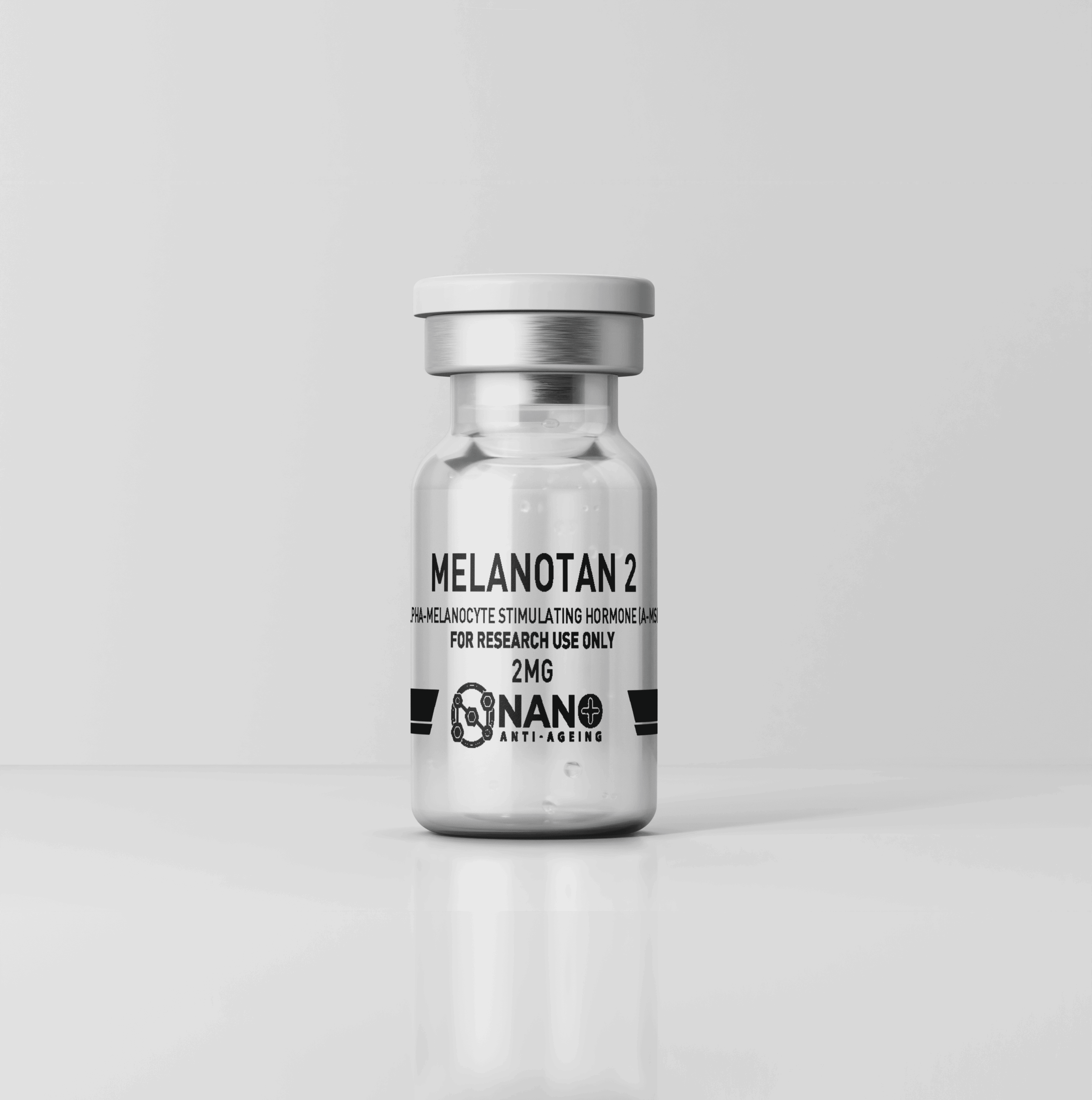
Melanotan 2

65.00 $

Melanotan-2 (MT-2) is a synthetic peptide that is a derivative of α-melanocyte-stimulating hormone (α-MSH) and plays a pivotal role in the regulation of skin pigmentation through its action on melanocytes. This compound is specifically designed to promote melanin production, thereby facilitating tanning. The mechanism of action of MT-2 is primarily mediated through the activation of melanocortin receptors (MCRs), particularly the melanocortin-1 receptor (MC1R), which is a crucial player in melanin synthesis pathways (Buscà & Ballotti, 2000). The stimulation of this receptor leads to increased expression of tyrosinase, the enzyme that catalyzes the rate-limiting step in melanin biosynthesis, thus enhancing pigmentation (Kim et al., 2023).

In the context of skin pigmentation regulation, exposure to ultraviolet (UV) radiation serves as a natural trigger for melanin production, acting through the same signaling pathways activated by MT-2. UV exposure induces enzymatic activity in melanocytes and enhances the proliferation of these pigment-producing cells, leading to a tanning effect, which is mediated by similar mechanisms employed by MT-2 (Buscà & Ballotti, 2000). Studies have shown that compounds which activate the signaling pathways involved in melanogenesis can effectively mimic the natural tanning response, highlighting MT-2’s functional role in skin pigmentation (Kim et al., 2023).

Furthermore, research illustrates that the application of MT-2 influences the expression of genes and proteins involved in skin responses to UV radiation, thus potentially offering protective effects against UV-induced skin damage by enhancing melanin production (Kim et al., 2023). This is particularly relevant as increased melanin provides a natural barrier against harmful UV rays, mitigating the risk of skin damage and photoaging (Buscà & Ballotti, 2000).

MT-2’s effectiveness in modulating skin pigmentation has spurred interest in its applications in various fields, including cosmetic dermatology. The peptide presents a viable alternative for individuals seeking a controlled tanning method without the adverse effects associated with excessive sun exposure and UV damage (Chung et al., 2017). Moreover, the pharmacokinetic profile of MT-2 has shown a favorable absorption and bioavailability profile when administered via various routes, contributing to its potential therapeutic uses in treating skin disorders associated with pigmentation (Prokocimer et al., 2011).

In summary, Melanotan-2 represents a compelling option for influencing skin pigmentation by mimicking the natural hormonal pathways involved in regulating melanogenesis. Its ability to enhance melanin production through the stimulation of specific receptors places it at the forefront of research in dermatological applications aimed at achieving optimal skin tone while offering protective benefits against UV-related skin damage.

References:
Buscà, R. and Ballotti, R. (2000). Cyclic amp a key messenger in the regulation of skin pigmentation. Pigment Cell Research, 13(2), 60-69. https://doi.org/10.1034/j.1600-0749.2000.130203.x
Chung, Y., Kim, S., Kim, J., Lee, G., Lee, J., Lee, N., … & Hyun, C. (2017). Pratol, an o-methylated flavone, induces melanogenesis in b16f10 melanoma cells via p-p38 and p-jnk upregulation. Molecules, 22(10), 1704. https://doi.org/10.3390/molecules22101704
Kim, H., Shin, S., Jang, Y., Cho, E., Park, D., & Jung, E. (2023). Sargassum fusiforme extract induces melanogenesis through the camp/pka/creb signaling pathway. Cosmetics, 10(4), 116. https://doi.org/10.3390/cosmetics10040116
Prokocimer, P., Bien, P., Surber, J., Mehra, P., DeAnda, C., Bulitta, J., … & Corey, G. (2011). Phase 2, randomized, double-blind, dose-ranging study evaluating the safety, tolerability, population pharmacokinetics, and efficacy of oral torezolid phosphate in patients with complicated skin and skin structure infections. Antimicrobial Agents and Chemotherapy, 55(2), 583-592. https://doi.org/10.1128/aac.00076-10

Melanotan-2 (MT-2) is a synthetic peptide that is a derivative of α-melanocyte-stimulating hormone (α-MSH) and plays a pivotal role in the regulation of skin pigmentation through its action on melanocytes. This compound is specifically designed to promote melanin production, thereby facilitating tanning. The mechanism of action of MT-2 is primarily mediated through the activation of melanocortin receptors (MCRs), particularly the melanocortin-1 receptor (MC1R), which is a crucial player in melanin synthesis pathways (Buscà & Ballotti, 2000). The stimulation of this receptor leads to increased expression of tyrosinase, the enzyme that catalyzes the rate-limiting step in melanin biosynthesis, thus enhancing pigmentation (Kim et al., 2023).

In the context of skin pigmentation regulation, exposure to ultraviolet (UV) radiation serves as a natural trigger for melanin production, acting through the same signaling pathways activated by MT-2. UV exposure induces enzymatic activity in melanocytes and enhances the proliferation of these pigment-producing cells, leading to a tanning effect, which is mediated by similar mechanisms employed by MT-2 (Buscà & Ballotti, 2000). Studies have shown that compounds which activate the signaling pathways involved in melanogenesis can effectively mimic the natural tanning response, highlighting MT-2’s functional role in skin pigmentation (Kim et al., 2023).

Furthermore, research illustrates that the application of MT-2 influences the expression of genes and proteins involved in skin responses to UV radiation, thus potentially offering protective effects against UV-induced skin damage by enhancing melanin production (Kim et al., 2023). This is particularly relevant as increased melanin provides a natural barrier against harmful UV rays, mitigating the risk of skin damage and photoaging (Buscà & Ballotti, 2000).

MT-2’s effectiveness in modulating skin pigmentation has spurred interest in its applications in various fields, including cosmetic dermatology. The peptide presents a viable alternative for individuals seeking a controlled tanning method without the adverse effects associated with excessive sun exposure and UV damage (Chung et al., 2017). Moreover, the pharmacokinetic profile of MT-2 has shown a favorable absorption and bioavailability profile when administered via various routes, contributing to its potential therapeutic uses in treating skin disorders associated with pigmentation (Prokocimer et al., 2011).

In summary, Melanotan-2 represents a compelling option for influencing skin pigmentation by mimicking the natural hormonal pathways involved in regulating melanogenesis. Its ability to enhance melanin production through the stimulation of specific receptors places it at the forefront of research in dermatological applications aimed at achieving optimal skin tone while offering protective benefits against UV-related skin damage.

References:
Buscà, R. and Ballotti, R. (2000). Cyclic amp a key messenger in the regulation of skin pigmentation. Pigment Cell Research, 13(2), 60-69. https://doi.org/10.1034/j.1600-0749.2000.130203.x
Chung, Y., Kim, S., Kim, J., Lee, G., Lee, J., Lee, N., … & Hyun, C. (2017). Pratol, an o-methylated flavone, induces melanogenesis in b16f10 melanoma cells via p-p38 and p-jnk upregulation. Molecules, 22(10), 1704. https://doi.org/10.3390/molecules22101704
Kim, H., Shin, S., Jang, Y., Cho, E., Park, D., & Jung, E. (2023). Sargassum fusiforme extract induces melanogenesis through the camp/pka/creb signaling pathway. Cosmetics, 10(4), 116. https://doi.org/10.3390/cosmetics10040116
Prokocimer, P., Bien, P., Surber, J., Mehra, P., DeAnda, C., Bulitta, J., … & Corey, G. (2011). Phase 2, randomized, double-blind, dose-ranging study evaluating the safety, tolerability, population pharmacokinetics, and efficacy of oral torezolid phosphate in patients with complicated skin and skin structure infections. Antimicrobial Agents and Chemotherapy, 55(2), 583-592. https://doi.org/10.1128/aac.00076-10

Reviews

There are no reviews yet.

Be the first to review “Melanotan 2”

Your email address will not be published. Required fields are marked *

Related Product

0
    Your Cart
    Your cart is emptyReturn to Shop
    Scroll to Top
    Generic selectors
    Exact matches only
    Search in title
    Search in content
    Post Type Selectors